Sicily Wine Tours: Vineyards, Tastings and Volcanic Wines to Discover
Sicily Wine Tours: Vineyards, Tastings and Volcanic Wines to Discover
Sicily: Where Wine Has a Very Dramatic Backstory
Not just a glass of wine, but a landscape
A wine tour in Sicily is not simply about drinking wine in a pretty countryside setting, although yes, that part is definitely included and no one is complaining.
In Sicily, wine is geography, history, geology, family tradition, climate, volcanic soil, sea breeze and occasionally a passionate explanation delivered beside a vineyard with a view that looks suspiciously too beautiful to be real.
For travelers searching for Sicily wine tours, Sicilian vineyards, wine tasting in Sicily, Etna wine tours and volcanic wines in Sicily, the island offers one of the most fascinating wine experiences in the Mediterranean.
From the black lava soils of Mount Etna to the historic cellars of Marsala, from the elegant reds of Vittoria to the coastal vineyards of Menfi, Sicily is not one wine destination. It is many wine worlds squeezed onto one island, because apparently being simple was never part of the plan.
Why Sicilian wine is so distinctive
Sicily’s wine identity comes from contrast. Hot sun and cool mountain air. Dry winds and sea influence. Ancient traditions and modern winemaking. Native grapes and international varieties. Volcanic soil, limestone, clay, sand and everything in between.
This variety gives Sicilian wines a personality that is difficult to reduce to one style.
Some are fresh and mineral. Some are bold and generous. Some are elegant and almost northern in character. Others arrive with the confidence of a Sicilian aunt who knows exactly how lunch should be done.
In short: Sicily has range.
Mount Etna Wine Tours: The Volcano in Your Glass
Why Etna wines are so special
If Sicily has one wine region that immediately captures attention, it is Mount Etna. And honestly, the volcano does not exactly try to stay in the background.
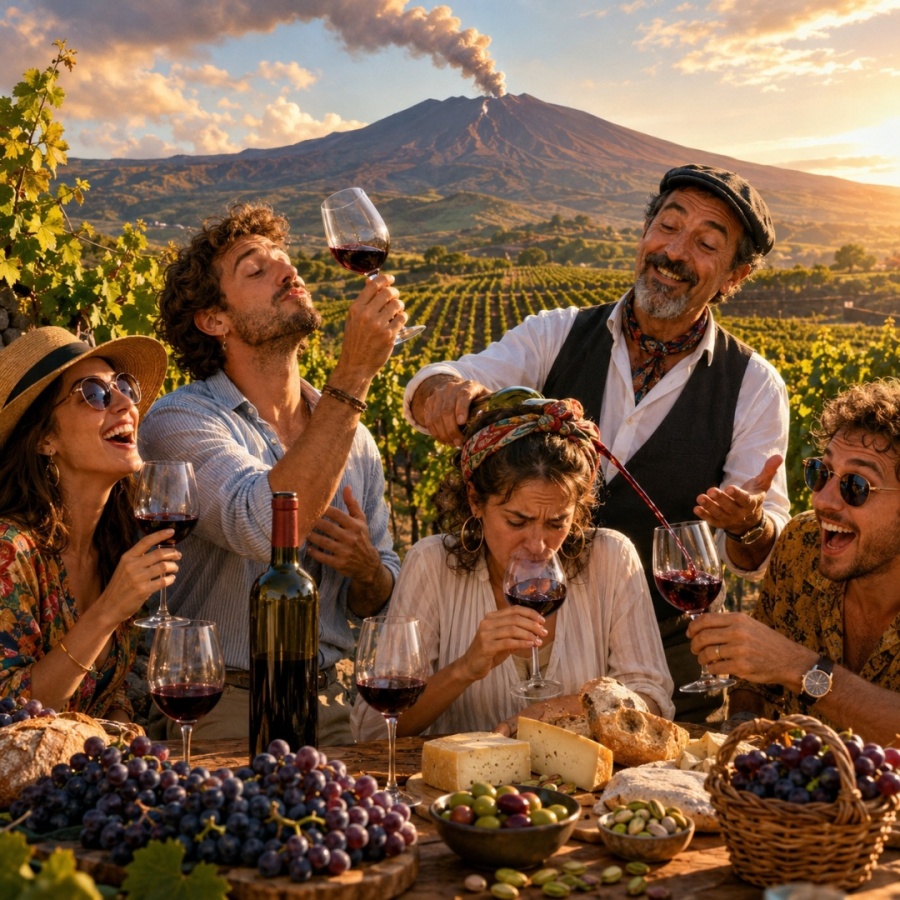
Etna’s vineyards grow on the slopes of one of Europe’s most active volcanoes, where black lava stone, altitude, mineral soils and big temperature differences create wines with remarkable character.
This is not just wine country. It is wine country with smoke, ancient lava flows, terraced vineyards, dry-stone walls, mountain villages and the constant reminder that the ground beneath your feet has opinions.
Etna wines are often described as elegant, mineral, fresh and complex. The reds can be refined and almost Burgundian in style, while the whites can be crisp, volcanic and surprisingly expressive.
Nerello Mascalese and Carricante
The two great stars of Etna wine are Nerello Mascalese and Carricante.
Nerello Mascalese is the main grape behind many Etna red wines. It can produce wines with red fruit, spice, structure, elegance and a kind of smoky mountain personality that clearly knows it grew on a volcano.
Carricante is the leading white grape of Etna. It often gives fresh, mineral wines with citrus notes, acidity and a long, clean finish. In the right hands, it can be extremely elegant.
In other words, Etna does not just produce dramatic views. It also produces wines that know how to behave at dinner.
What an Etna wine tour feels like
A typical Etna wine tour is not only a visit to a cellar. It can include volcanic landscapes, old lava flows, mountain villages, vineyards, wine tastings and food pairings.
You might walk between rows of vines growing from black volcanic soil, visit a family-run winery, taste Etna Rosso and Etna Bianco, and learn how altitude and lava have shaped the wine.
It is one of the best ways to understand the connection between nature, culture and agriculture in Sicily.
Also, it is much easier to appreciate geology when someone is pouring wine while explaining it.
Discover private Etna experiences with Etna Unlimited
Marsala: Sicily’s Historic Wine Legend
The fortified wine that traveled the world
Marsala is one of Sicily’s most famous wine names, and for a long time it was the Sicilian wine most people outside the island recognized.
Located in western Sicily, Marsala became known for its fortified wines, exported across Europe and beyond. Its history is connected to trade, British merchants, sea routes and a very practical discovery: wine that travels well is extremely useful when ships and business are involved.
Marsala wine can be dry, semi-dry or sweet, and it ranges from simple styles to complex, aged wines with notes of dried fruit, nuts, caramel and spice.
Unfortunately, many people only know Marsala from cooking. This is unfair. Marsala has more to say than “please add me to a sauce.”
Wine and salt pans
A wine tour around Marsala can easily be combined with the nearby salt pans, windmills and coastal landscapes between Trapani and Marsala.
This western corner of Sicily offers a very different atmosphere from Etna: flatter, brighter, more open, with sea light, warm winds and sunsets that behave like they have been professionally staged.
For wine lovers, Marsala is a reminder that Sicilian wine history is not only about vineyards. It is also about trade, ports, ships, families and centuries of Mediterranean exchange.
Vittoria and Cerasuolo di Vittoria: Sicily’s Elegant Red Side
A wine region with charm and balance
In southeastern Sicily, the area around Vittoria offers another important chapter in the island’s wine story.
This is the home of Cerasuolo di Vittoria, one of Sicily’s most elegant and distinctive red wines. Made mainly from Nero d’Avola and Frappato, it combines structure, freshness, red fruit, floral notes and a very drinkable personality.
Which is a polite way of saying: it often disappears from the glass faster than expected.
Nero d’Avola and Frappato
Nero d’Avola is one of Sicily’s most famous red grapes. It can be rich, warm, fruity and structured, with the kind of Mediterranean confidence that does not ask permission.
Frappato, on the other hand, is lighter, aromatic, fresh and elegant. Together, in Cerasuolo di Vittoria, they create balance: power and brightness, depth and drinkability.
For travelers who enjoy red wines but want something refined and not overly heavy, this region is well worth exploring.
Pair it with Baroque towns
A wine experience in southeastern Sicily can be beautifully combined with visits to Ragusa, Modica, Scicli or Noto.
Baroque architecture, local food, chocolate from Modica and elegant wines make this area ideal for travelers who want culture and taste in the same itinerary.
Because in Sicily, a “simple wine tour” often accidentally becomes architecture, history, lunch and a small personal transformation.
Menfi, Sambuca and Western Sicily’s Coastal Vineyards
Sea breeze and generous landscapes
The wine areas around Menfi, Sambuca di Sicilia and the southwestern coast offer yet another style of Sicilian wine experience.
Here, vineyards stretch between hills and sea, with a mix of native and international varieties. The landscape is softer than Etna, more open, sunlit and coastal.
Wines from this part of Sicily often express warmth, fruit, freshness and Mediterranean generosity.
In other words, they are very good at making you think: “Maybe I should stay another day.”
Wine, beaches and countryside
One of the joys of this region is the easy combination of wine and coastal travel. A day might include a vineyard visit, a tasting, a countryside lunch and time near the sea.
For travelers who want a relaxed wine itinerary with beautiful landscapes, western and southwestern Sicily offer excellent possibilities.
It is less volcanic drama, more sunlit abundance. Sicily, naturally, provides both, because moderation is apparently not its main talent.
Native Sicilian Grapes to Know Before Your Wine Tour
Red grapes
Knowing a few grape names can make a wine tasting in Sicily much more enjoyable. Not because you need to sound like a sommelier, but because it helps you understand what is in your glass.
- Nerello Mascalese: Etna’s elegant red grape, often mineral, fresh and complex.
- Nero d’Avola: Sicily’s famous red grape, rich, warm and fruit-forward.
- Frappato: fresh, aromatic and lighter, especially important around Vittoria.
- Perricone: a traditional red grape with spice, structure and character.
White grapes
- Carricante: Etna’s mineral and elegant white grape.
- Catarratto: one of Sicily’s historic white varieties, used in many styles.
- Grillo: fresh, aromatic and important in western Sicily and Marsala history.
- Inzolia: soft, Mediterranean and often pleasant with seafood.
- Zibibbo: aromatic, intense and famous especially in sweet and dry styles from Pantelleria.
The good news is that you do not need to memorize everything before your trip.
The better news is that tasting is a very efficient study method.
What to Expect During a Sicilian Wine Tasting
More than just “red or white”
A good Sicilian wine tasting usually includes several wines, an explanation of the winery, the vineyards, the grape varieties and the territory.
Depending on the winery, you might also visit the cellar, walk through the vineyards, see old barrels or modern tanks, and learn how local climate and soil influence the final wine.
On Etna, this often includes discussion of altitude, lava flows, contrade, old vines and volcanic minerals. In western Sicily, the focus may shift toward sea influence, historic trade, warm climate and coastal landscapes.
Food pairings matter
Many wine tastings in Sicily include local food pairings, and this is not a minor detail.
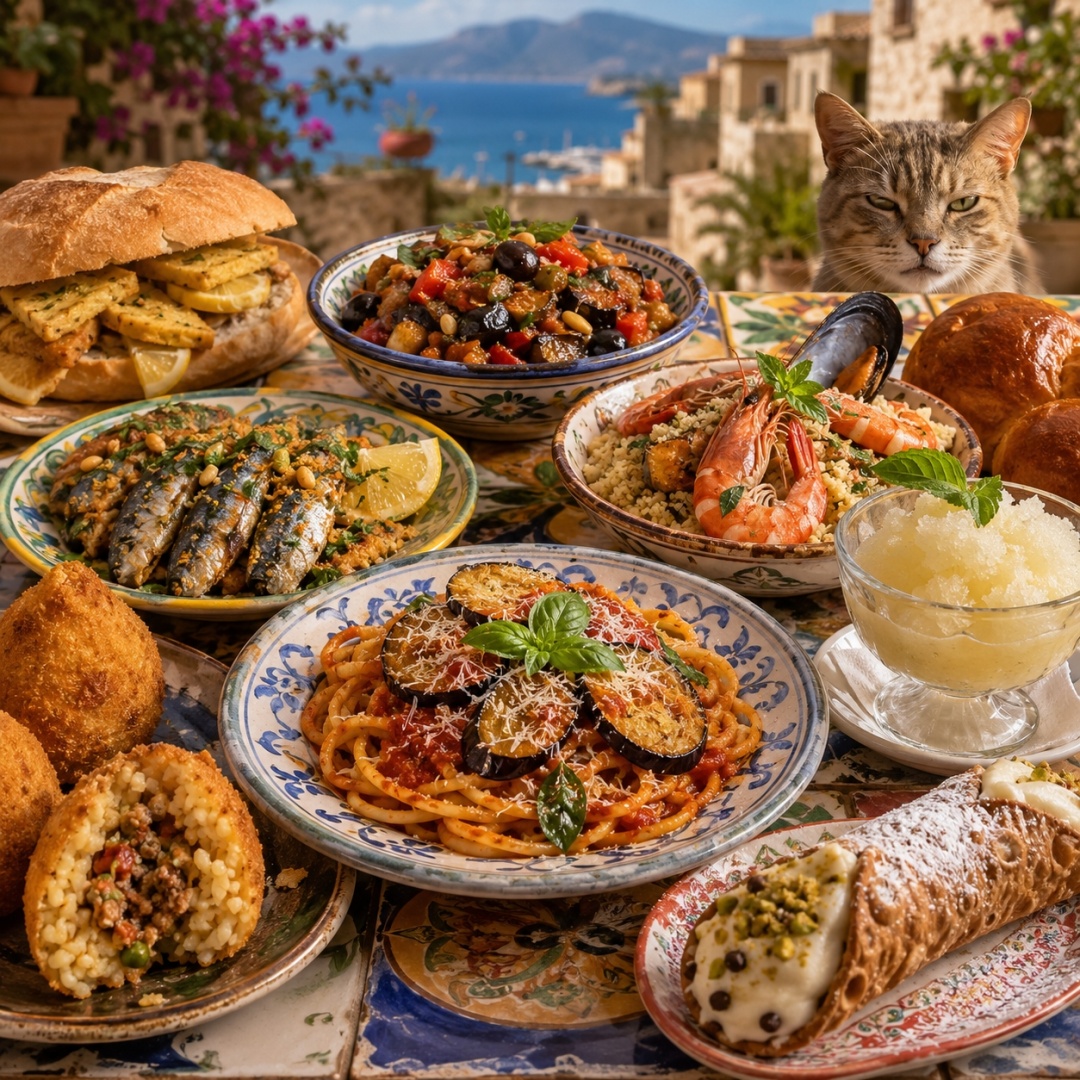
Cheese, cured meats, olives, bread, olive oil, caponata, sun-dried tomatoes, pasta, seafood or sweets can all change the way wine expresses itself.
Also, wine tasting without food in Sicily feels slightly suspicious. The island has standards.
Private vs group tastings
Group tastings can be enjoyable and sociable, but private wine tours offer more flexibility, better timing and a deeper experience.
A private tour can be adapted to your interests: small family wineries, scenic vineyards, premium tastings, food pairings, off-road landscapes, historic towns or a combination of wine and nature.
This is especially useful on Mount Etna, where the wine region is closely connected to the volcano, the landscape and local history.
How to Choose the Best Sicily Wine Tour
Decide what kind of experience you want
Before booking a wine tour in Sicily, ask yourself what you actually want from the day.
- Do you want a relaxed tasting with lunch?
- Are you interested in volcanic wines?
- Do you prefer small family-run wineries?
- Do you want scenic vineyards and photography?
- Would you like to combine wine with history or nature?
- Are you looking for a premium tasting or something informal?
There is no single “best” wine tour. There is the best wine tour for your style.
Very revolutionary, we know.
Consider logistics
Wine tours involve transportation, timing and sometimes rural roads. If you plan to taste seriously, driving yourself is not ideal.
A guided wine tour with private transport allows everyone to enjoy the tasting without needing to appoint one tragic person as the “responsible adult with no wine.”
On Etna, logistics also matter because wineries are spread across different villages and slopes. A good itinerary saves time and creates a smoother experience.
Choose fewer wineries, better experiences
Do not try to visit too many wineries in one day. Two excellent wineries with a relaxed lunch can be much more memorable than four rushed tastings and a confused palate.
Wine deserves time. So does Sicily. And so do you, unless your dream vacation is sprinting between glasses like an over-caffeinated sommelier.
Best Seasons for Wine Tours in Sicily
Spring: green vineyards and mild weather
Spring is a beautiful time for wine tours in Sicily. Vineyards are green, temperatures are pleasant and the landscapes feel fresh and alive.
It is also a great season for combining wine with hiking, archaeological sites and countryside visits.
Summer: warm, lively and best planned carefully
Summer offers long days, bright light and a lively atmosphere, but heat can be intense, especially away from the coast.
Wine tastings are still enjoyable, especially with shaded terraces, cellars and evening experiences. Just avoid overloading the day.
Wine, sun and ambitious itineraries can form a dangerous alliance.
Autumn: harvest season and wine atmosphere
Autumn is one of the best seasons for wine lovers. Harvest time brings energy to the vineyards, the light becomes softer and the weather is often ideal.
September and October are especially good for wine tours, food experiences and travel across the island.
Winter: quiet cellars and deeper conversations
Winter wine tours are quieter and more intimate. Vineyards may be bare, but cellars are welcoming, tastings feel slower and wineries often have more time for detailed explanations.
For travelers who prefer authenticity over crowds, winter can be surprisingly rewarding.
Wine and Food: The Sicilian Way to Understand Everything
Pairing wine with local food
Sicilian wines make the most sense when paired with the island’s food.
Etna Rosso can work beautifully with grilled meats, mushrooms, aged cheeses and rustic dishes. Etna Bianco can pair well with seafood, fresh cheese and vegetable dishes.
Nero d’Avola loves rich sauces, roasted meats and bold flavors. Frappato is wonderful with lighter dishes, antipasti and even slightly chilled in warm weather.
Marsala can accompany desserts, cheeses or be enjoyed as a meditation wine, which is a fancy way of saying: sit down and take it seriously.
Food tells the same story as wine
The food and wine of Sicily come from the same landscape. Volcanic soil, sea air, sun, mountains, wheat, citrus, olives, herbs and long traditions all meet at the table.
A wine tour becomes much more meaningful when paired with local ingredients.
Otherwise, it is like reading only half the sentence. A very nice half, but still half.
Sicily Wine Tours with Mount Etna at the Center
Why Etna is perfect for private wine experiences
Etna is one of the best areas in Sicily for private wine tours because it offers more than vineyards.
Within the same day, you can explore lava landscapes, panoramic roads, old villages, chestnut forests, vineyards, wine cellars and local food.
This makes Etna ideal for travelers who want their wine tour to feel connected to the territory, not just to a tasting room.
Combine wine with volcano, nature or villages
An Etna wine experience can be combined with a short walk on old lava flows, a visit to extinct craters, a scenic drive through mountain villages or a lunch in a traditional setting.
This is what makes the region special: the wine is not separated from the landscape. It grows from it, literally and culturally.
And yes, the volcano does insist on making the whole experience more dramatic. It cannot help itself.
Final Thought: Sicily Wine Is a Journey, Not Just a Tasting
A wine tour in Sicily is not only about what you drink.
It is about where the wine comes from, who makes it, what kind of soil shaped it, what food belongs beside it and what stories live around it.
From Etna’s volcanic slopes to Marsala’s historic cellars, from Vittoria’s elegant reds to the sunlit vineyards of the west, Sicilian wine is a journey through the island itself.
It is geological, agricultural, cultural and deeply human.
Also, it tastes good. Which is not a minor detail.
So choose your region, slow down, taste with curiosity and let Sicily explain itself one glass at a time.
It is not always subtle.
But honestly, neither is the island.
🍷 Ready to discover Sicily through its vineyards and volcanic wines? Explore Mount Etna, local wineries, tastings and authentic food experiences with Etna Unlimited and turn your wine tour into a journey through the island’s most flavorful landscapes.