From Volcanoes to Beaches: Experiencing Sicily’s Diverse Ecosystems
From Volcanoes to Beaches: Experiencing Sicily’s Diverse Ecosystems
Sicily: One Island, Several Personalities
A natural world that refuses to be simple
Sicily is often introduced as a sunny Mediterranean island with beaches, food and historic towns. Which is true. But also a bit like describing Mount Etna as “a hill with ambition.”
The island is much more complex than that.
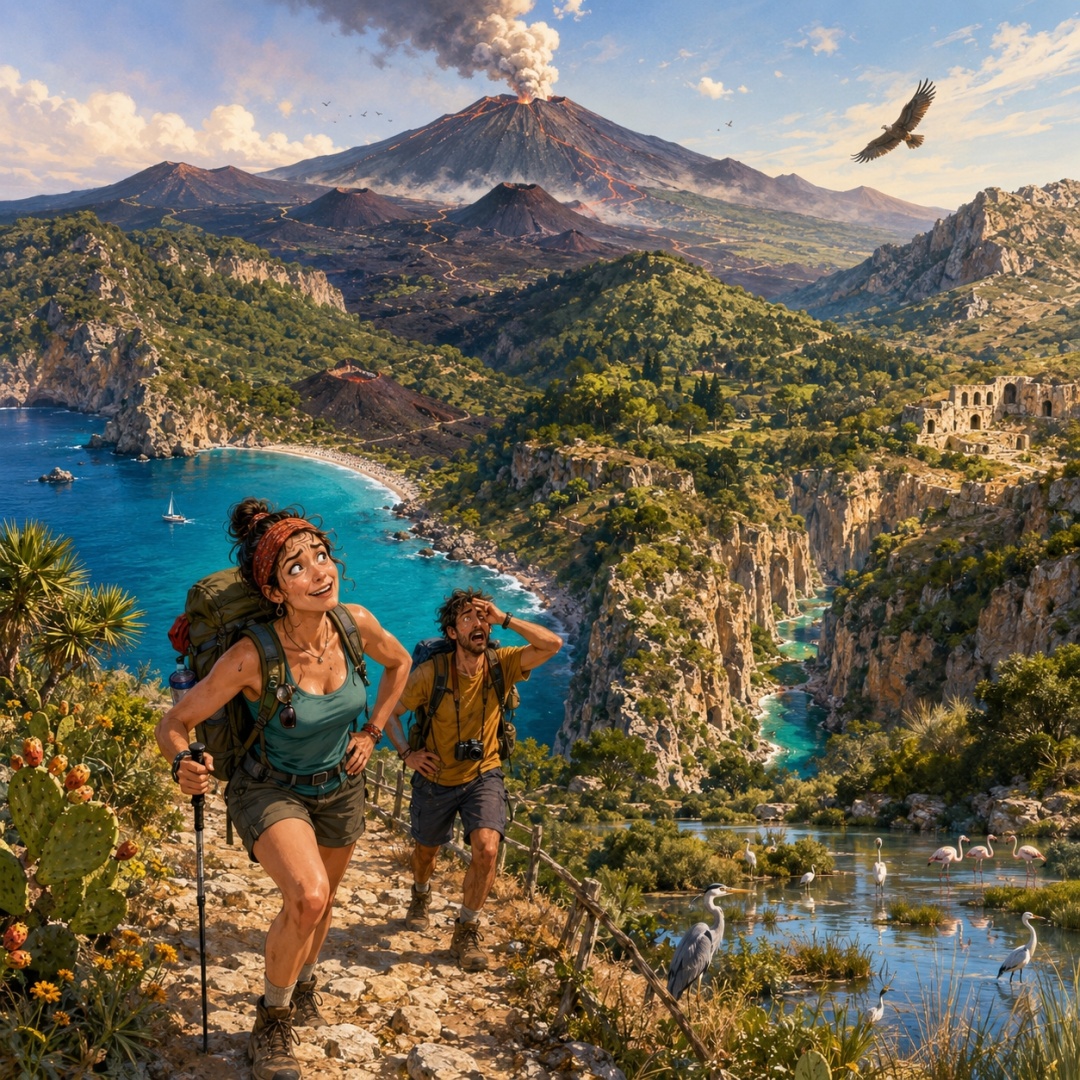
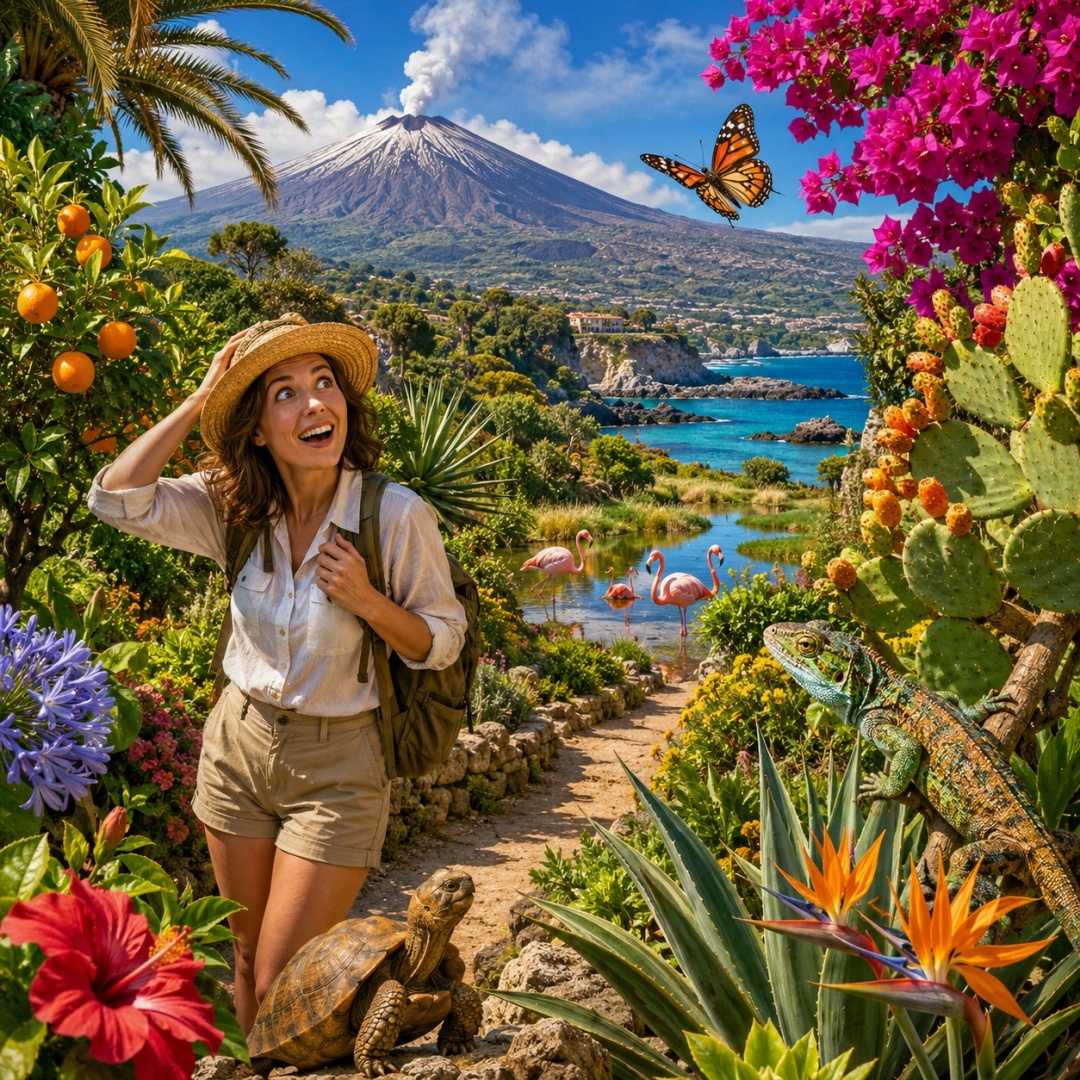
In a single journey, you can move from black lava deserts to green forests, from snow-covered volcanic slopes to golden beaches, from mountain villages to wetlands full of migratory birds. Sicily is not one landscape. It is a full collection of ecosystems, all packed into one island with a strong sense of drama.
For travelers interested in Sicily nature, Mount Etna landscapes, Sicily beaches, nature reserves in Sicily and Mediterranean biodiversity, the island offers an outdoor experience that changes constantly.
Why Sicily’s ecosystems are so diverse
Sicily sits in the heart of the Mediterranean, between Europe and Africa, shaped by volcanoes, mountains, sea currents, winds and centuries of human history.
The result is a natural mosaic: volcanic soils, coastal dunes, forests, wetlands, limestone gorges, island cliffs, cultivated terraces and marine habitats.
It is as if nature looked at Sicily and said: “Let’s not choose. Let’s do everything.”
Mount Etna: The Volcanic Heart of Sicily
Europe’s highest active volcano
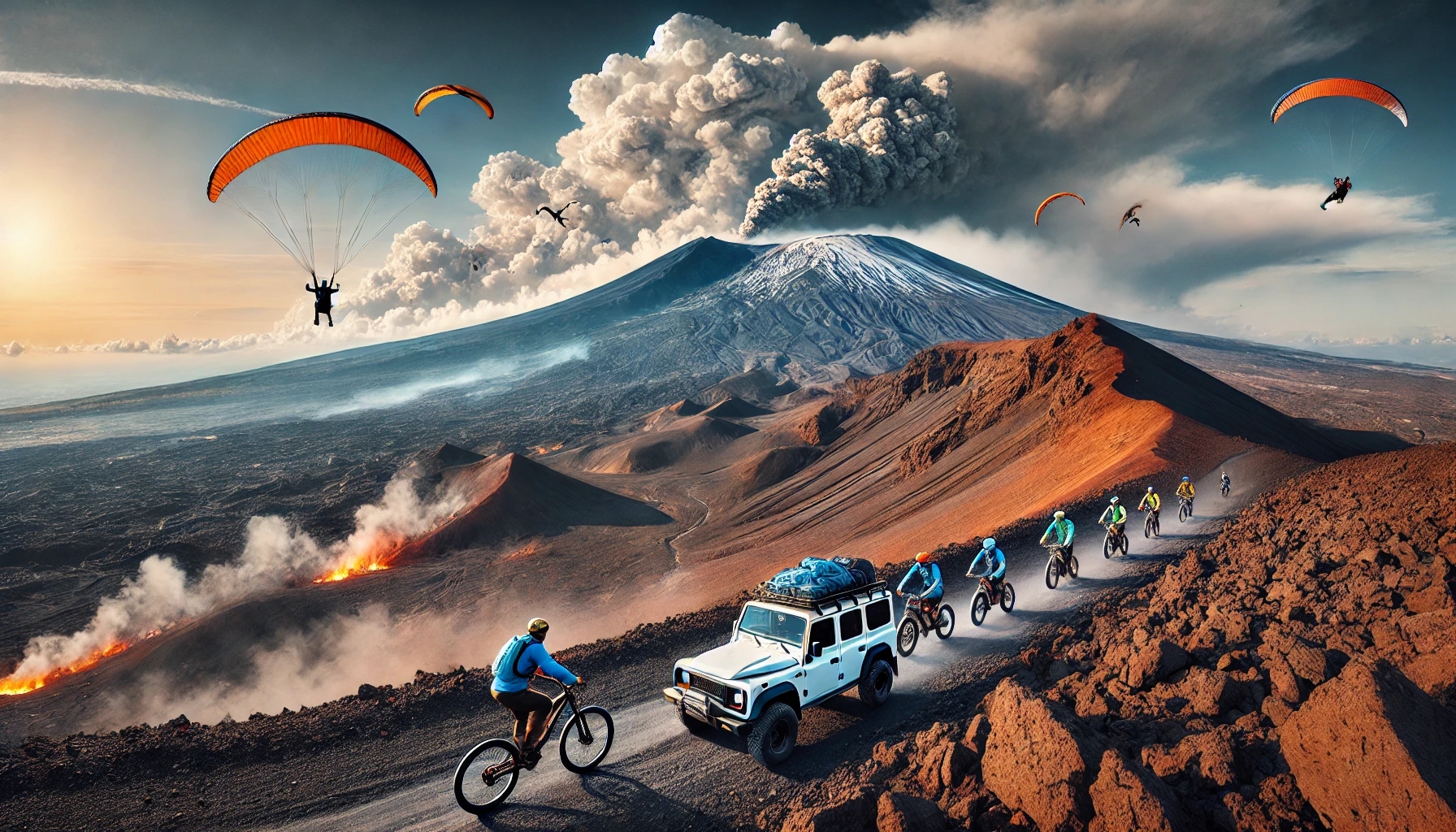
No conversation about Sicily ecosystems can begin anywhere other than Mount Etna. The volcano dominates the eastern side of the island, both physically and emotionally.
Etna is not just a mountain. It is a living environment, constantly reshaped by eruptions, lava flows, ash, wind, snow and time. Here, the landscape can feel ancient and brand new at the same time, which is quite an achievement for a place that regularly rearranges itself with magma.
Walking on Etna means crossing terrain that may be thousands of years old, a few centuries old, or younger than your hiking boots.
Lava fields and pioneer plants
One of the most fascinating aspects of Etna’s ecosystem is how life returns after an eruption.
At first, a fresh lava flow looks lifeless: black, sharp, dry and not exactly welcoming. You do not look at it and think, “What a cozy garden.”
But slowly, nature begins its quiet comeback. Lichens appear first. Then mosses, grasses, small shrubs and eventually trees. Over time, what was once a barren lava field can become a living landscape again.
This process makes Etna one of the best places in Sicily to understand ecological succession — or, in simpler terms, nature’s stubborn refusal to give up.
Forests, craters and altitude zones
Etna’s ecosystem changes with altitude. Lower slopes are shaped by vineyards, orchards and chestnut groves. Higher up, forests of pine, oak, beech and birch appear, followed by open volcanic landscapes where vegetation becomes sparse and the mountain takes on a lunar mood.
The famous Etna birch, found on the volcano’s slopes, adds a northern-looking touch to a deeply Mediterranean island. Because Sicily apparently felt that beaches, citrus trees and lava were not enough; it also wanted birches.
For hikers and nature lovers, this variety makes Mount Etna one of the most rewarding outdoor destinations in Sicily.
Explore Mount Etna hiking trails
Volcanic Soil: Where Fire Becomes Fertility
Etna’s generous contradiction
Volcanoes destroy. Then they feed. It is a dramatic relationship, but Sicily has learned to work with it.
Etna’s volcanic soils are rich in minerals and have shaped some of the island’s most distinctive agricultural landscapes. Vineyards, pistachio groves, hazelnut trees, orchards and vegetable gardens grow on land created by ancient eruptions.
There is something beautifully Sicilian about this: the same mountain that covers towns in ash also helps produce wine, fruit and food with extraordinary character.
Rude? A little.
Generous? Also yes.
Vineyards, pistachios and lava terraces
The slopes of Etna are famous for their wines, cultivated on black volcanic soil and terraced landscapes. These vineyards are not just agricultural areas; they are part of the ecosystem and cultural identity of the volcano.
On the western side of Etna, around Bronte, pistachio trees grow in lava-rich terrain, producing one of Sicily’s most celebrated ingredients.
Here, geology is not something abstract. It ends up in your glass, on your plate and occasionally in a dessert that makes you question every supermarket pistachio you have ever eaten.
Sicily’s Mountain Ecosystems: Forests, Peaks and Cool Air
Beyond the coastline
Many visitors imagine Sicily as a beach destination. Fair enough. The beaches are not exactly shy. But the island’s mountain ecosystems are equally important.
Ranges such as the Madonie, Nebrodi and Sicani offer forests, highland pastures, rivers, rocky peaks and wildlife-rich landscapes. These areas reveal a greener, quieter Sicily far from the summer beach crowds.
It is the Sicily of cool air, stone villages, forest trails and silence, a concept the island practices beautifully when it wants to.
Madonie and Nebrodi: Sicily’s hidden green heart
The Madonie Mountains are among the richest natural areas in Sicily, with forests, limestone landscapes and rare plant species. The Nebrodi range, stretching across the north-east of the island, is known for broad forests, lakes, pastures and a softer mountain atmosphere.
These mountain areas create an important contrast with the volcanic world of Etna. If Etna is dramatic, black and slightly unpredictable, the Madonie and Nebrodi feel calmer, greener and less likely to suddenly cough ash into the sky.
Why mountain nature matters
These ecosystems are essential for biodiversity, water resources, traditional agriculture and rural life.
They also give travelers a very different experience of Sicily: cooler temperatures, forest walks, panoramic roads, small villages and a sense of distance from the more famous coastal routes.
In other words, Sicily has a mountain soul too. It just sometimes gets overshadowed by beaches wearing sunglasses.
Wetlands and Salt Pans: Sicily’s Quiet Wildlife Sanctuaries
Where birds steal the show
Sicily’s wetlands may not be as immediately famous as Etna or the beaches, but they are some of the island’s most important ecosystems.
Places such as the salt pans near Trapani and Marsala, the Vendicari Nature Reserve and other coastal wetlands provide essential habitats for migratory birds.
Flamingos, herons, storks and many other species use Sicily as a stopover between Europe and Africa. Apparently, even birds understand that Sicily is a good place to pause, eat and reconsider life choices.
Vendicari Nature Reserve
Vendicari, in south-eastern Sicily, is one of the best places to experience the island’s wetland ecosystem. It combines lagoons, dunes, rocky coastline, sandy beaches, Mediterranean vegetation and archaeological remains.
This is classic Sicily: you go looking for birds and end up finding beaches, ruins, tuna-fishing history and a landscape that looks like it was carefully designed to ruin your schedule.
Salt pans and human-shaped nature
The salt pans of western Sicily are a beautiful example of how human activity and natural habitats can coexist when managed carefully.
Windmills, shallow salt basins, flamingos and sunset light create one of the island’s most atmospheric landscapes.
It is peaceful, photogenic and slightly unfair to every other sunset you have ever seen.
Coastal Ecosystems: Beaches, Dunes and Marine Life
Sicily’s beaches are more than pretty sand
Yes, Sicily has beautiful beaches. Obviously. The island did not forget to include them.
But Sicily’s coast is not only about swimming and sunbathing. Coastal ecosystems include dunes, cliffs, rocky shores, seagrass meadows, marine reserves and habitats for birds, reptiles, insects and coastal plants.
The best beaches in Sicily are not just scenic. They are living environments.
From golden beaches to black volcanic shores
One of the great pleasures of exploring the Sicilian coast is its variety. Some beaches are sandy and golden. Others are rocky, wild or dark because of volcanic origin.
Along the eastern coast, lava has shaped dramatic black rocks and rugged shorelines. Around the Aeolian Islands, volcanic beaches and cliffs create landscapes that feel almost otherworldly.
Because apparently normal beaches were not enough. Sicily needed beaches with geological backstory.
Marine reserves and underwater ecosystems
Sicily’s marine areas protect important habitats, including seagrass meadows, rocky seabeds and coastal waters rich in marine life.
Marine reserves such as the Egadi Islands, Ustica and Plemmirio near Syracuse are among the best places to appreciate Sicily’s underwater biodiversity.
For travelers who enjoy snorkeling, diving or simply staring into impossibly clear water pretending to be philosophical, Sicily offers plenty of opportunities.
River Gorges and Inland Landscapes
A different kind of wild Sicily
Not all of Sicily’s natural wonders are volcanic or coastal. Inland, the island hides river gorges, canyons, limestone cliffs and rocky valleys.
These landscapes are especially fascinating because they reveal the power of water in a region often associated with sun and dry summers.
Apparently, Sicily enjoys contradictions. Volcano and sea. Snow and beaches. Dry hills and hidden rivers. Why choose a theme when you can have a full production?
Alcantara Gorge
The Alcantara Gorge, near Mount Etna, is one of Sicily’s most spectacular examples of water meeting volcanic rock. The river has carved its way through ancient lava, creating high basalt walls with striking geometric shapes.
The result is a landscape that looks engineered, except nature did it first and did not require a committee.
For visitors exploring eastern Sicily, the Alcantara area offers a refreshing contrast to Etna’s dry lava fields and the nearby coastline.
Cavagrande and limestone landscapes
In south-eastern Sicily, areas such as Cavagrande del Cassibile reveal another side of the island: deep canyons, natural pools and limestone cliffs surrounded by Mediterranean vegetation.
These places remind travelers that Sicily’s ecosystems are not only wide and scenic, but also hidden, vertical and surprisingly dramatic.
How to Experience Sicily’s Ecosystems Responsibly
Travel slowly, observe more
Sicily rewards travelers who slow down. Moving quickly from one landscape to another may look efficient on a map, but nature does not always perform on command. Very inconsiderate of it, but true.
Take time to walk, listen, observe and notice how the environments change. The best part of Sicily’s ecosystems is often in the transitions: where lava meets forest, where dunes meet wetlands, where mountains drop toward the sea.
Choose local guides and protected areas
Exploring with local guides helps visitors understand what they are seeing, avoid fragile areas and discover places that are easy to miss.
Protected areas, regional parks and nature reserves are the best places to experience Sicily’s biodiversity while supporting conservation and responsible tourism.
Respect the landscape
- Stay on marked trails when hiking
- Do not remove rocks, plants or shells
- Avoid disturbing wildlife
- Carry water and sun protection
- Never underestimate Etna’s weather or terrain
- Leave beaches and trails cleaner than you found them
Nature in Sicily has survived volcanoes, earthquakes, invasions and several thousand years of human enthusiasm. It does not need plastic bottles as a souvenir.
From Volcano to Beach in One Day
The Sicilian superpower
One of Sicily’s most extraordinary qualities is that you can experience very different ecosystems in a single day.
You can walk on lava fields in the morning, cross chestnut forests before lunch, visit a vineyard in the afternoon and swim in the Ionian Sea before sunset.
This is not normal. Sicily simply pretends it is.
Eastern Sicily: the perfect ecosystem route
Eastern Sicily is especially rich in natural contrasts. Mount Etna, the Alcantara Gorge, the Ionian coast, lava cliffs, vineyards, forests and historic towns are all relatively close to each other.
For travelers who want a complete nature experience, this region offers one of the best introductions to Sicily’s diversity.
It is possible to explore volcanic landscapes and coastal environments without spending the entire day inside a car, which is always a bonus unless you are unusually attached to parking problems.
Final Thought: Sicily Is Nature With a Sense of Theatre
Sicily’s ecosystems are not subtle.
They do not quietly ask for attention. They arrive with volcanoes, beaches, cliffs, forests, flamingos, lava fields, vineyards, canyons and sunsets that behave as if they have an audience.
And honestly, they do.
The island’s natural diversity is one of its greatest treasures. It offers adventure, beauty, contrast and a deeper understanding of how geology, climate, plants, animals and human life are connected.
From Mount Etna to the sea, from wetlands to mountain forests, Sicily is a living landscape, complex, generous, unpredictable and impossible to reduce to a postcard.
Although, to be fair, it does look excellent on postcards too.
🌿 Ready to explore Sicily from volcanoes to beaches? Discover lava landscapes, wild coastlines, forests and nature reserves with Etna Unlimited and experience the island’s most spectacular natural contrasts.