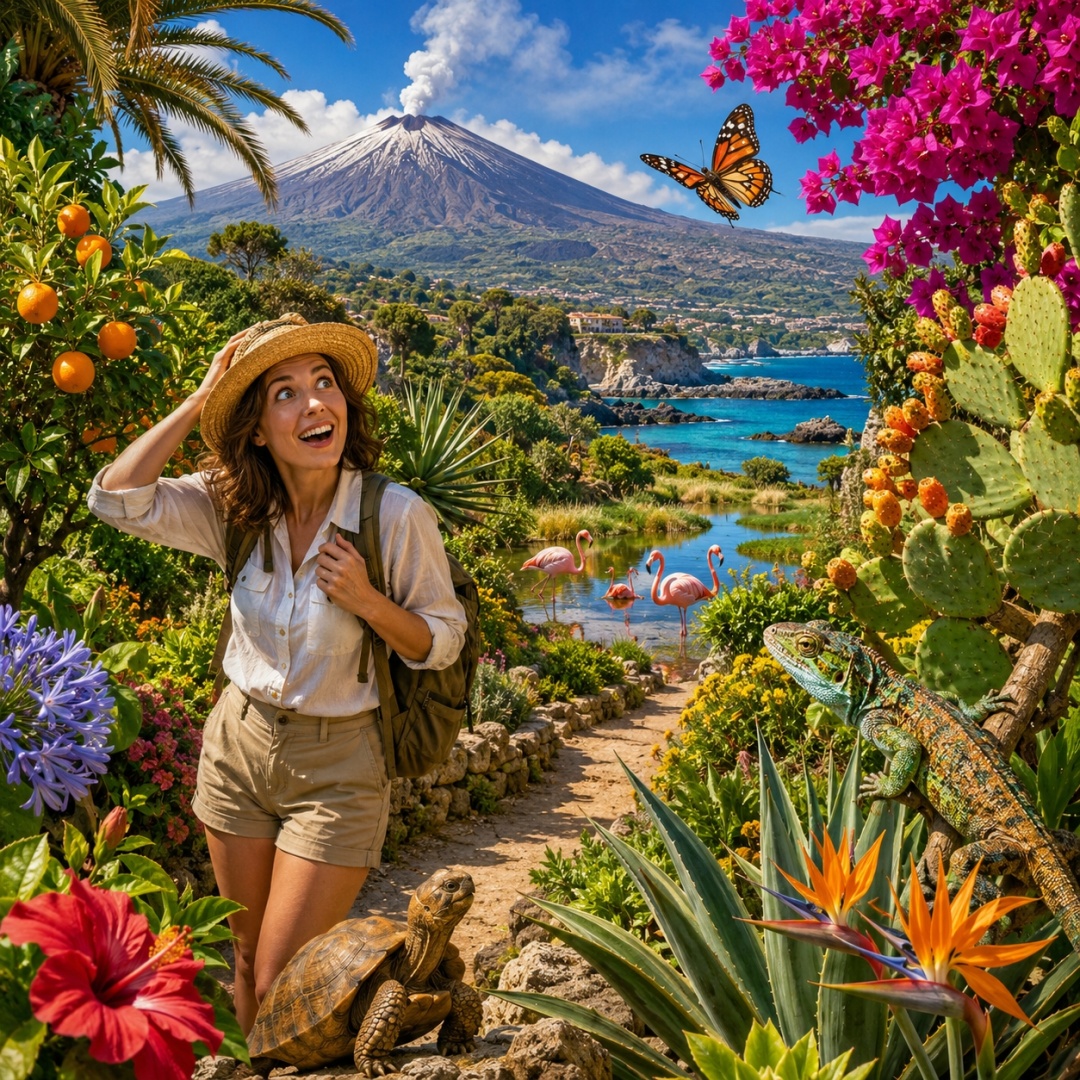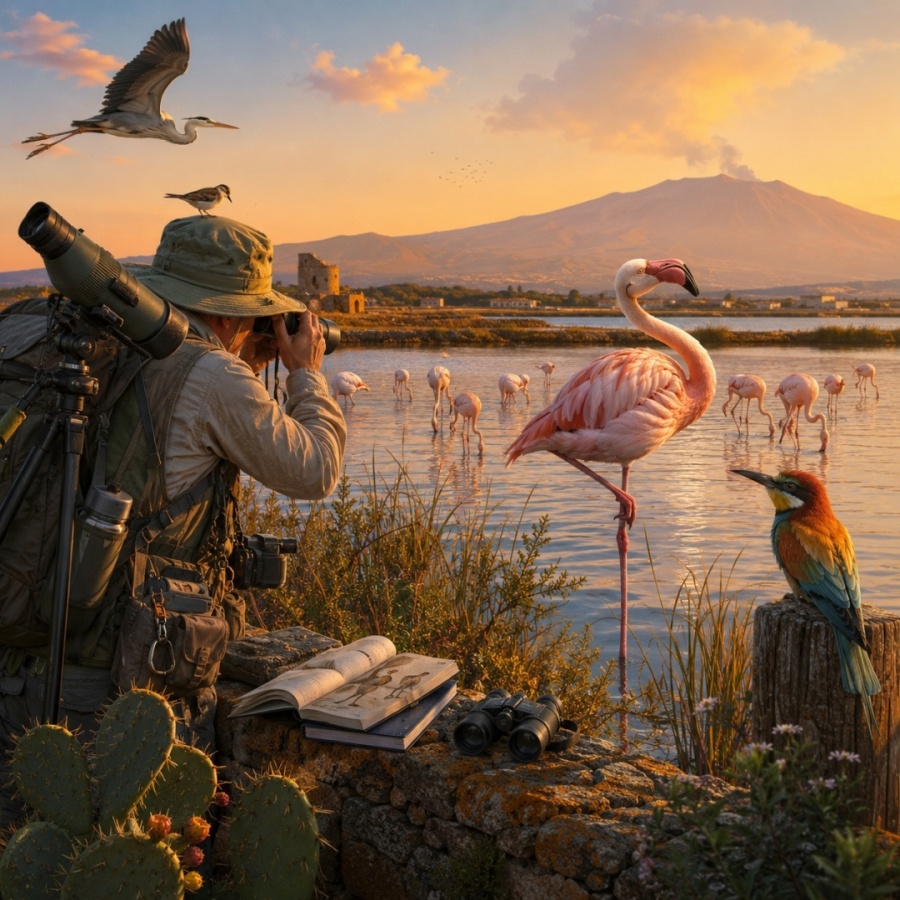
Birdwatching in Sicily: Top Spots for Nature Lovers
Birdwatching in Sicily: Top Spots for Nature Lovers
Sicily is famous for many things: ancient ruins, volcanoes, beaches, wine, street food and an impressive ability to make visitors rethink their entire relationship with carbohydrates.
But for nature lovers, the island has another, quieter treasure.
Birds.
Lots of them.
Sicily sits in the middle of the Mediterranean, between Europe and Africa, which makes it far more than a sunny island with dramatic coastlines. It is also a natural crossroads, a resting place, a winter refuge and a migration corridor for many species of birds moving between continents.
In spring and autumn, wetlands, salt pans, coastal lagoons, mountain ridges and volcanic slopes become part of a much larger story: thousands of wings crossing the sea, stopping to feed, rest and continue their journey.
It is one of those things Sicily does very well: looking beautiful while secretly being geologically, historically and ecologically important.
Very modest, obviously.
This guide explores the best birdwatching spots in Sicily, from famous reserves such as Vendicari to less obvious wetlands, mountain parks and migration viewpoints. Whether you are an experienced birder with binoculars permanently attached to your body, or simply a curious traveler who likes flamingos, herons and the idea of walking quietly without anyone trying to sell you a souvenir magnet, Sicily has plenty to offer.
Why Sicily Is Great for Birdwatching
A Mediterranean bridge between Europe and Africa
Sicily’s location is the key to its birdlife. The island lies between the European mainland and North Africa, close enough to both to become an essential stopover during migration.
For birds, Sicily is not just a destination.
It is a service station.
But with better scenery.
Wetlands, lagoons and salt pans provide food and shelter for waterbirds. Coastal cliffs and islands attract seabirds. Mountain parks and forests host woodland species. Open countryside and volcanic slopes are hunting grounds for raptors.
The result is a surprisingly rich birdwatching landscape, where a single trip can include flamingos, herons, ducks, waders, bee-eaters, hoopoes, kestrels, buzzards, harriers and, during migration, birds that seem to appear from nowhere and then vanish with suspicious efficiency.
Different habitats, different birds
Sicily is not one ecosystem. It is many ecosystems arguing dramatically in the same room.
There are salty wetlands in the south-east, coastal lagoons near Gela, salt pans in the west, volcanic forests on Mount Etna, highland woods in the Nebrodi and Madonie, cliffs along the coast and small islands surrounded by migratory routes.
This variety is exactly what makes birdwatching in Sicily so interesting. You are not limited to one type of landscape or one type of bird.
You can watch flamingos in a coastal wetland, search for raptors near the Strait of Messina, walk through Etna’s forests looking for woodland species, and then end the day in a seaside town eating something fried.
Because this is Sicily, and balance matters.
Best Time for Birdwatching in Sicily
Spring migration
Spring is one of the best seasons for birdwatching in Sicily. From March to May, many birds move north from Africa toward Europe, crossing or stopping on the island along the way.
This is a good period to observe migratory species, especially in wetlands, coastal reserves and areas linked to the Strait of Messina.
The countryside is green, wildflowers are abundant, temperatures are usually pleasant and the island has not yet entered its “everyone please find shade immediately” summer mode.
Autumn migration
Autumn is another excellent season. From late August through October, birds move south toward Africa, and wetlands often become active again with migrating waders, herons, ducks and other species depending on water levels and weather conditions.
Autumn also has softer light, fewer crowds and the pleasant feeling that Sicily has calmed down after the summer performance.
Winter birdwatching
Winter can be very rewarding, especially in wetlands and coastal areas. Ducks, coots, waders, gulls and other wintering birds can be observed in several reserves.
It may not be beach weather, at least not for sane people, but it can be a wonderful time for slow nature travel, photography and peaceful walks.
Summer birdwatching
Summer is not impossible, but it requires strategy. Go early in the morning or late in the afternoon, avoid the hottest hours and bring water.
Birdwatching at noon in July is technically possible.
So is regretting your choices.
Vendicari Nature Reserve: Sicily’s Birdwatching Classic
The most famous wetland reserve in south-eastern Sicily
If you mention birdwatching in Sicily, Vendicari Nature Reserve is usually one of the first names to appear and for good reason.
Located on the south-eastern coast between Noto and Marzamemi, Vendicari combines wetlands, coastal lagoons, sandy beaches, rocky shores, Mediterranean vegetation, old tuna-fishing buildings and watchtowers.
In other words, it is doing a lot.
The reserve is especially important because it lies along migration routes between Europe and Africa. Its lagoons and marshes offer resting and feeding areas for many birds during seasonal movements.
What birds can you see in Vendicari?
Depending on the season, Vendicari can offer flamingos, herons, egrets, spoonbills, storks, ducks, coots, gulls, waders and other wetland species.
Hoopoes, bee-eaters and various passerines may also be seen in the surrounding vegetation and open areas.
Of course, nature does not operate like a hotel buffet.
You cannot simply arrive and demand flamingos.
They are birds, not customer service.
But Vendicari remains one of the most reliable and enjoyable places in Sicily for birdwatching, especially in spring, autumn and winter.
Why nature lovers enjoy Vendicari
Vendicari is not only about birds. It is also one of the most beautiful coastal reserves in Sicily. You can combine birdwatching with easy walking, beaches, photography, historical ruins and views over the sea.
There are observation points near the wetlands, and the paths are generally accessible compared with more demanding mountain or canyon areas.
This makes Vendicari a good choice for experienced birders, casual nature lovers and mixed groups where one person wants to identify waders and another mainly wants a scenic walk followed by lunch.
Both are valid spiritual paths.
Biviere di Gela: A Key Wetland for Migratory Birds
One of Sicily’s most important coastal lakes
The Biviere di Gela, on Sicily’s southern coast, is one of the island’s most important wetland areas for migratory and wintering birds.
This coastal lake and its surrounding habitats provide a crucial resting and feeding place for many species, particularly waterbirds.
It is less famous among general tourists than places like Taormina or Cefalù, which is part of its charm. Birdwatching often improves when fewer people are taking selfies with dramatic facial expressions.
What birds can you see at Biviere di Gela?
Birds recorded in the area include ducks, herons, egrets, flamingos, waders, gulls, marsh harriers and many other wetland species depending on season and water conditions.
Because it is an important stopover and wintering area, Biviere di Gela is particularly interesting for visitors who want to experience Sicily beyond the postcard version.
This is not the Sicily of terraces and aperitifs.
This is the Sicily of binoculars, reeds, muddy edges and the quiet thrill of seeing something wild arrive from another continent.
Best for serious nature lovers
Biviere di Gela is especially suitable for birders and travelers with a strong interest in wetlands and migration. It may require more planning than Vendicari and is best approached with up-to-date local information, respect for protected areas and patience.
Birdwatching rewards patience.
Which is unfortunate for people who treat nature like a fast-food order.
Pantani Cuba and Longarini: South-Eastern Sicily’s Wild Wetlands
Lagoons with serious birdwatching potential
The Pantani Cuba and Longarini wetlands, near the south-eastern coast of Sicily, are among the most interesting areas for birdwatchers looking beyond the better-known reserves.
These lagoons are important for migrating, wintering and sometimes breeding birds, especially waterbirds and waders.
The landscape is flatter, quieter and more subtle than volcanic Etna or dramatic coastal cliffs. But for birdwatchers, subtle is often excellent.
A wetland that looks empty to one person may be full of activity to someone with binoculars.
This is one of the reasons birders are both fascinating and occasionally difficult to walk with.
What makes Pantani Cuba and Longarini special?
Their location near the south-eastern tip of Sicily makes them valuable for birds moving between Europe and Africa. Depending on the time of year and water levels, the area may host waders, ducks, herons, flamingos, gulls and other wetland species.
The experience here can feel wilder and less polished than in more famous reserves.
That is not a disadvantage.
It is often where the best observations happen.
Practical advice
Access conditions, water levels and observation opportunities can vary, so it is wise to check recent information before visiting. These wetlands are best suited to birdwatchers who are comfortable with less tourist-oriented places and who understand that the best views often require quiet, patience and possibly shoes that do not fear mud.
Salt Pans of Trapani and Paceco: Flamingos, Salt and Big Skies
Western Sicily’s elegant birdwatching landscape
On the western side of Sicily, the Salt Pans of Trapani and Paceco offer one of the island’s most atmospheric birdwatching settings.
Here, shallow salt basins, windmills, low horizons and changing light create a landscape that feels almost painted.
And because Sicily cannot resist combining beauty with usefulness, these salt pans are also important habitats for birds.
What birds can you see?
Depending on season and conditions, visitors may see flamingos, herons, egrets, avocets, stilts, gulls, terns and other species connected to shallow waters and saline environments.
Flamingos are especially popular, because apparently nature decided that large pink birds walking through salt pans at sunset was a reasonable aesthetic choice.
We accept.
Best for photography
The salt pans are excellent for birdwatching and photography, especially in the softer light of morning or late afternoon. The open landscape, reflections and historic windmills make the area visually striking even when the birds are not cooperating.
Which, because they are birds, sometimes they will not.
The Strait of Messina: Raptors on the Move
One of the Mediterranean’s great migration corridors
The Strait of Messina, between Sicily and Calabria, is one of the most important migration points in the central Mediterranean, especially for raptors and other large birds moving between Africa and Europe.
During migration periods, birds use winds, thermals and land routes to cross this narrow stretch of sea.
To humans, the Strait is a beautiful and sometimes windy channel.
To birds, it is a strategic crossing point.
To people waiting for ferries, it is occasionally a test of patience.
What birds can be seen near the Strait?
During spring migration especially, the area can be important for honey buzzards, black kites, marsh harriers, Montagu’s harriers, storks and other migratory birds.
Observation depends strongly on weather, timing and location. This is not a casual “arrive whenever and see everything” experience. It is best for birders who enjoy migration watching and understand that wind direction can become a surprisingly emotional topic.
Best for raptor enthusiasts
If wetlands are about patience and detail, raptor migration is about sky-reading. The Strait of Messina is one of the best areas in Sicily for anyone interested in birds of prey and large-scale migration.
Bring binoculars, check local conditions and prepare to look up for long periods while pretending your neck is fine.
Mount Etna: Forest Birds, Raptors and Volcanic Landscapes
Birdwatching on an active volcano
Mount Etna is usually associated with lava, craters and eruptions, but it is also an excellent area for nature watching.
The volcano’s slopes include forests, lava fields, orchards, scrubland and high-altitude landscapes. This variety creates habitats for different species of birds, from woodland birds to raptors.
Etna is not a wetland birdwatching destination like Vendicari or Gela.
It is something else entirely.
Because, naturally, Sicily thought birdwatching would be more interesting on an active volcano.
What birds can you see on Etna?
Depending on altitude and habitat, visitors may encounter woodland species, finches, tits, woodpeckers, jays, wheatears, kestrels, buzzards and other birds of open and forested landscapes.
The lower and middle slopes are especially interesting because they combine cultivated land, chestnut woods, pine forests, lava flows and volcanic clearings.
This is birdwatching with geology included.
At no extra charge.
Best places and approach
Good birdwatching areas on Etna include forested routes, quieter lava trails, areas around old craters and zones where woodland meets open volcanic terrain.
The best approach is slow walking, early starts and attention to sound. In forests, birds are often heard before they are seen.
This can be frustrating for people who believe nature should introduce itself clearly.
It usually does not.
Nebrodi Mountains: Forests, Lakes and Highland Birds
Sicily’s green mountain world
The Nebrodi Mountains show a side of Sicily that surprises many visitors: green, wooded, humid and mountainous.
This is not the dry island stereotype. It is a landscape of beech forests, oaks, pastures, lakes and high ridges, with views that can reach the Tyrrhenian Sea and the Aeolian Islands on clear days.
For birdwatchers, the Nebrodi offer a different experience from the coastal wetlands. Here the focus shifts toward woodland birds, raptors, mountain species and the quieter rhythm of forest observation.
Lakes and forest habitats
Areas around lakes, forest tracks and open highland zones can be rewarding for nature lovers. The landscape is also excellent for travelers who want birdwatching combined with walking, mountain air and a sense of inland Sicily far from the usual coastal routes.
The Nebrodi are ideal if you enjoy the kind of silence where every call, wingbeat and rustle suddenly feels important.
Or possibly like a wild pig.
Either way, you will pay attention.
Madonie Mountains: Birds, Botany and Mountain Villages
A natural and cultural birdwatching area
The Madonie Mountains, east of Palermo, are another excellent area for nature lovers who want more than beaches and baroque towns.
The park includes forests, limestone peaks, open slopes, old paths and traditional villages. This habitat diversity supports many bird species and makes the area attractive for walkers, photographers and birdwatchers.
The Madonie are not only about seeing birds.
They are about understanding a mountain landscape where nature, rural culture and geology overlap.
Sicily, as usual, refuses to be simple.
Best for slow nature travel
The Madonie are especially rewarding for travelers who enjoy combining birdwatching with hiking, village visits, local food and wide views. You may not see the large numbers of wetland birds found in coastal reserves, but you can experience a richer mountain environment.
Sometimes birdwatching is about lists.
Sometimes it is about standing on a ridge, listening carefully and realizing that the view is already enough.
Aeolian Islands and Smaller Islands: Birds Over the Sea
Island migration and seabirds
Sicily’s smaller islands, including the Aeolian Islands, can be interesting for birdwatching, especially during migration.
Islands often act as resting points for birds crossing the sea. Coastal cliffs, scrubland, volcanic slopes and isolated habitats can attract migratory passerines, seabirds and raptors depending on season and weather.
For birdwatchers, islands have a special charm.
You never quite know what might arrive.
Which is also true of ferries, but that is a different emotional category.
Best for patient observers
Island birdwatching is not always predictable. Weather, wind and migration timing matter greatly. But for patient nature lovers, islands can offer memorable observations, dramatic landscapes and the feeling of watching birds in the middle of their journey.
It is a good reminder that migration is not an abstract concept.
It is a real movement of living creatures over water, wind and distance.
Other Good Birdwatching Areas in Sicily
Coastal wetlands and river mouths
Beyond the famous reserves, Sicily has many smaller wetlands, river mouths, coastal ponds and agricultural areas that can be interesting for birdwatching.
Some are not major tourist attractions, but birds do not care about tourism branding.
They care about food, shelter and safe resting places.
This is one of the useful lessons of birdwatching: important places do not always look spectacular at first glance.
Countryside and farmland
Open countryside, olive groves, vineyards, citrus orchards and dry fields can host bee-eaters, hoopoes, shrikes, buntings, larks, kestrels and many other species depending on the season.
Driving slowly through rural Sicily, stopping respectfully and listening can reveal surprising birdlife.
It can also reveal goats, abandoned farm machinery and roads that appear to have been designed as philosophical tests.
All part of the experience.
Birds You Might See in Sicily
Wetland birds
In Sicily’s wetlands and lagoons, nature lovers may observe flamingos, herons, egrets, spoonbills, storks, ducks, coots, stilts, avocets, sandpipers and other waders.
The exact species depend on season, habitat and migration conditions.
Birds enjoy making this clear.
Mostly by not appearing when you promised someone they would.
Raptors
Birds of prey may include kestrels, buzzards, marsh harriers, black kites and, during migration, other raptors passing through key areas such as the Strait of Messina.
Raptor watching requires patience, sky awareness and the ability to say “that tiny dot might be interesting” with complete seriousness.
Colorful and charismatic birds
Bee-eaters, hoopoes, kingfishers, rollers and other colorful species may be seen in the right habitats and seasons.
These are the birds that turn casual walkers into sudden experts because everyone wants to know what that beautiful thing was.
Birdwatching begins exactly there.
Practical Tips for Birdwatching in Sicily
Bring binoculars
This sounds obvious, but it must be said. Birdwatching without binoculars is possible, but it is like visiting an art gallery from the parking lot.
A lightweight pair of binoculars can transform the experience, especially in wetlands where birds may be distant.
Go early or late
Early morning and late afternoon are often the best times for bird activity and light. They are also more comfortable in warm seasons.
Midday in Sicily can be harsh, especially in summer.
Birds know this.
You should too.
Stay quiet and patient
Birdwatching rewards stillness. Move slowly, avoid loud noise and give wildlife space.
If your plan is to arrive shouting, waving and asking where the flamingos are, nature may choose not to participate.
Respect protected areas
Stay on marked paths, use observation hides where available, do not disturb nesting birds and avoid entering sensitive areas.
A good birdwatcher sees more by disturbing less.
This is also decent life advice.
Check access and conditions
Wetlands change with water levels, seasons and weather. Some areas may have limited access, seasonal restrictions or fragile habitats.
Before visiting, check recent local information, especially for less tourist-oriented places.
Nature is not a museum with fixed opening scenes.
That is part of the appeal.
Combining Birdwatching with a Sicily Trip
For a first-time visitor
If this is your first trip to Sicily and you want to include birdwatching without making the entire journey a scientific expedition, Vendicari is probably the easiest choice.
It combines birds, sea, walking, history and beautiful scenery in one accessible reserve.
This is ideal for mixed-interest travelers: one person can watch birds, another can admire the coast, and everyone can later agree that lunch is important.
For serious birders
More dedicated birdwatchers should consider combining Vendicari, Biviere di Gela, Pantani Cuba and Longarini, the Trapani salt pans and the Strait of Messina depending on season.
This gives a broader view of Sicily’s migration routes, wetlands and raptor movement.
It also gives you a legitimate reason to carry binoculars everywhere and look intensely at distant shapes.
For nature photographers
Vendicari, Trapani salt pans and the wetlands of south-eastern Sicily are particularly photogenic. Early morning and sunset light can be spectacular.
Just remember: wildlife photography is mostly waiting, failing, waiting again and then suddenly getting one excellent moment.
Very Sicilian, in a way.
Suggested Birdwatching Itinerary in Sicily
A simple three-day nature route
If you want a short birdwatching-focused route, you could plan something like this:
Day 1: Vendicari Nature Reserve, with slow walks between wetlands, coast and observation points.
Day 2: Pantani Cuba and Longarini or Biviere di Gela, depending on your base and current conditions.
Day 3: Mount Etna or the Strait of Messina, depending on whether you prefer forest and volcanic landscapes or raptor migration.
This itinerary gives a good mix of wetlands, coast, migration and inland nature without turning your holiday into a military operation with feathers.
A longer nature-focused trip
With more time, you can add the Trapani salt pans, Nebrodi or Madonie mountains, and possibly one of the smaller islands.
At that point, you are no longer just “including some birdwatching.”
You are birdwatching in Sicily properly.
Congratulations. Your travel companions may now begin rolling their eyes when you stop the car for “just one quick look.”
Final Thoughts: Sicily Is for More Than Sun and Sea
Birdwatching in Sicily reveals an island that many visitors overlook.
Beyond the beaches, monuments and famous towns, Sicily is a living crossing point between continents, habitats and seasons.
Its wetlands host migratory birds. Its mountains shelter woodland species. Its volcanic slopes create unusual habitats. Its straits and islands guide birds across the Mediterranean.
It is an island of movement.
People have crossed it for millennia.
Birds still do.
And if you slow down enough to watch them, Sicily becomes even richer.
So bring binoculars, patience, good shoes and a willingness to look beyond the obvious.
The island has wings.
You just have to notice them.
🌋 Ready to discover Sicily’s wild nature with a local guide? Explore Mount Etna, coastal reserves, hidden landscapes and authentic outdoor experiences with Etna Unlimited.
Discover nature and adventure tours in Sicily
Etna Unlimited Excursions & Tours