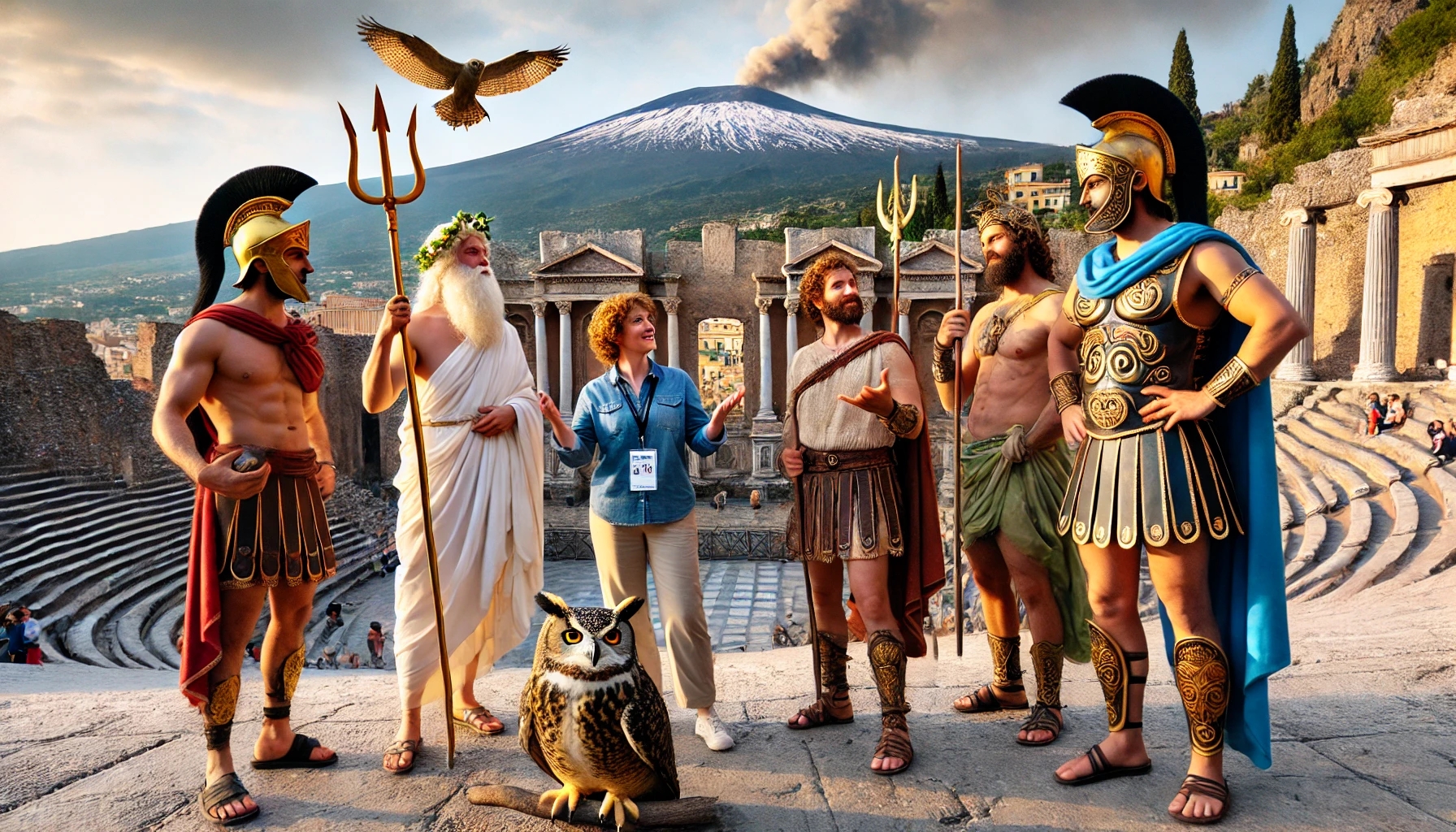
Walking Through Time: A Historic Tour of Sicily’s Iconic Landmarks
Walking Through Time: A Historic Tour of Sicily’s Iconic Landmarks
Sicily doesn’t preserve history.
It lives inside it.
Here, every cobblestone has survived an empire.
Every ruin has outlasted a dynasty.
Every piazza has hosted centuries of human drama — triumphs, invasions, festivals, and the occasional philosophical argument over wine.
This is not a museum island.
It’s a time machine with better food.
Sicily: Where Civilizations Never Really Left
An Island Written in Stone
Sicily has been everyone’s favorite conquest.
Greeks arrived with temples.
Romans with roads.
Arabs with gardens and geometry.
Normans with fortresses.
Spaniards with drama.
Instead of replacing one another, they stacked themselves politely, like architectural lasagna.
The result?
An island where 2,500 years of history casually coexist on the same street.
Why History Feels Alive Here
In Sicily, ruins aren’t fenced off in silence.
Children play near ancient columns.
Markets bloom beside medieval churches.
Life hums around monuments older than recorded time.
History doesn’t whisper.
It chats loudly over espresso.
Ancient Wonders That Still Command Awe
The Valley of the Temples, Agrigento
Gigantic Greek temples stand like frozen symphonies in stone.
The Temple of Concordia, almost absurdly well preserved, glows amber at sunset, as if lit from within by ancient pride.
Walking here feels less like sightseeing.
More like trespassing through antiquity.
The Greek Theatre of Syracuse
Its acoustics still astonish.
Whispers travel.
History listens.
From the upper rows, the view stretches across land and sky, exactly as ancient spectators saw it two millennia ago.
Timeless is not a metaphor here.
Cities Built on Layers of Time
Palermo’s Baroque Brilliance
Arab domes neighbor Norman palaces.
Baroque fountains sparkle beside medieval alleys.
The city feels chaotic, until you realize the chaos is simply centuries overlapping.
Every corner reveals another epoch.
Palermo doesn’t hide its past.
It layers it extravagantly.
Catania’s Lava-Stone Legacy
Dark basalt stone shapes palaces, churches, and plazas, giving the city a dramatic, almost cinematic aura.
It’s Baroque, but forged by fire.
History here isn’t fragile.
It’s volcanic.
Nature as a Historical Monument
Mount Etna: The Eternal Sculptor
For thousands of years, Etna has shaped:
• landscapes
• towns
• agriculture
• legends
Its eruptions erased cities and fertilized new life.
Destruction and creation in eternal dialogue.
Villages Shaped by the Volcano
Towns along Etna’s slopes were rebuilt again and again.
Stone over stone.
Century over century.
Each eruption left scars and opportunities.
Vineyards now grow in volcanic soil so rich it borders on magical.
Villages cling to lava ridges like historical sentinels.
Here, geology writes history.
Turning History Into Experience
Walking Tours and Local Encounters
Sicily rewards those who explore slowly.
On foot, you notice:
• ancient carvings in doorways
• Roman stones reused in walls
• Arabic arches hiding in courtyards
History reveals itself in details.
Not displays.
Why Sicily Is Best Explored Slowly
This is not a checklist destination.
It’s a place to wander.
To listen.
To absorb.
Each ruin gains meaning when paired with its landscape, its people, its flavors.
Time here deserves respect.
Final Thought
Sicily is not a chapter of history.
It is the entire book, still being written.
From Greek temples glowing at sunset to cities forged from lava, from theatres carved in stone to streets layered with centuries, this island offers something rare:
The chance to walk through time itself.
Slowly.
Wonderingly.
Hungrily for more.
Because in Sicily, the past isn’t behind you.
It’s all around you.