Mount Etna Eruption June 2026: Current Activity Explained
Mount Etna Eruption June 2026: Current Activity Explained. A clear, practical guide to what is happening on Mount Etna right now, based on INGV monitoring data: lava flow from the summit area, white degassing, occasional ash emissions, the role of the Voragine crater, the Valle del Leone lava field and what visitors should know before planning an Etna excursion.

The Mount Etna eruption before Julius Caesars death
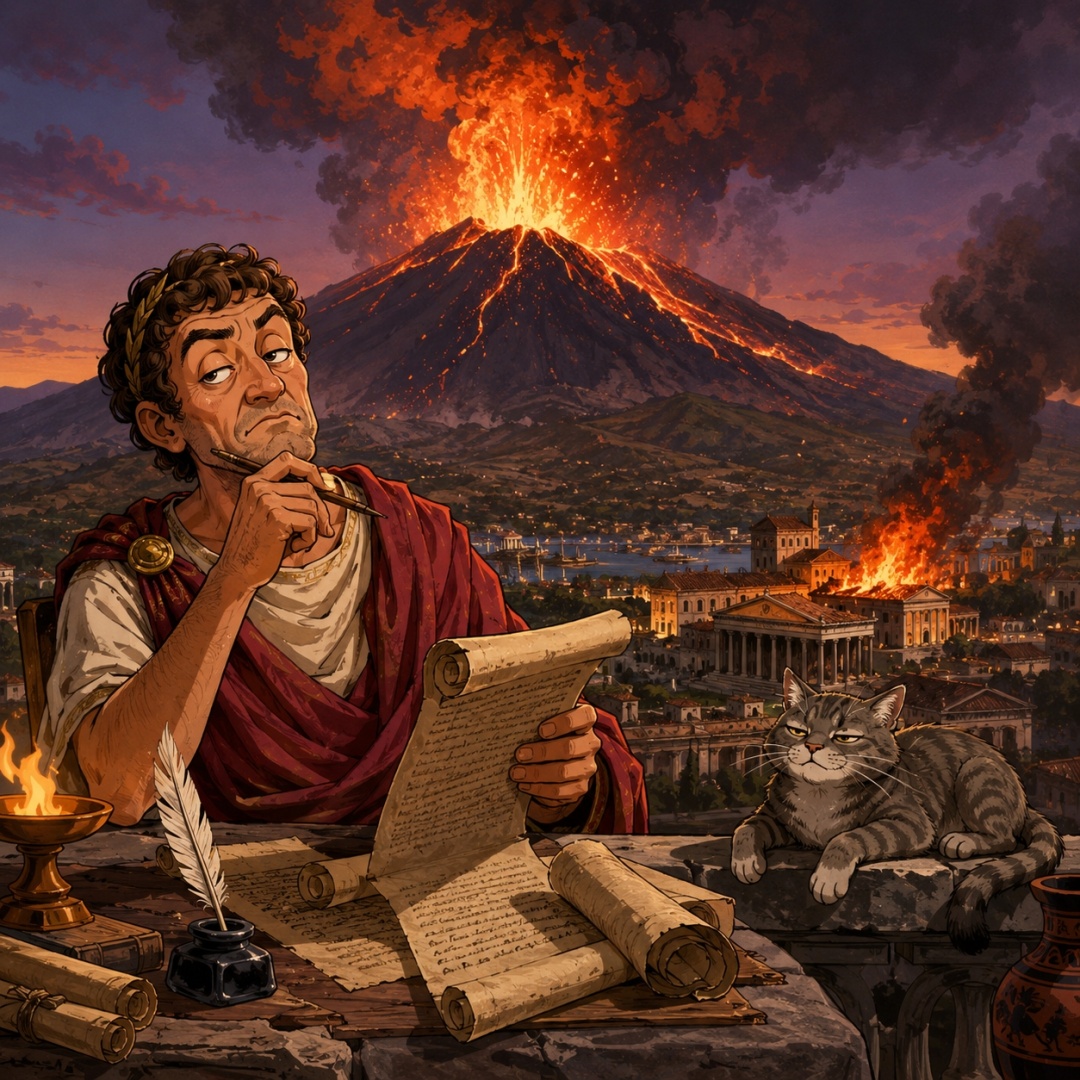
Just days before Julius Caesar’s assassination, Mount Etna may have produced one of the largest eruptions of the ancient world. Roman sources describe a pale sun, hazy skies, strange halos, and even three suns in the sky. This article explores the link between volcanoes, history, and atmospheric phenomena, where ancient omens meet modern scientific interpretation.

How Ancient Romans Explained Mount Etna
Long before modern volcanology, ancient thinkers tried to understand why volcanoes erupt. In the 1st century BCE, the Roman poet Lucretius described Mount Etna in De Rerum Natura, proposing a natural explanation for volcanic eruptions. This article explores how ancient Romans interpreted Etna and how early scientific thinking began to replace myth.

When the Volcano Feeds the Vine: Posidonius and the Fertile Fury of Mount Etna
In the first century BC, the philosopher Posidonius describes the dual nature of Mount Etna’s eruptions. Though the volcanic ash initially damages the land, it later proves to be highly fertile, nourishing vines and pastures. A powerful ancient reflection on the delicate balance between destruction and rebirth.