Mount Etna's Fiery Fling in 387 BC: A Volcanic Valentine's Day… Kinda
Mount Etna's Fiery Fling in 387 BC: A Volcanic Valentine's Day… Kinda
A Rumbling in the Ancient World
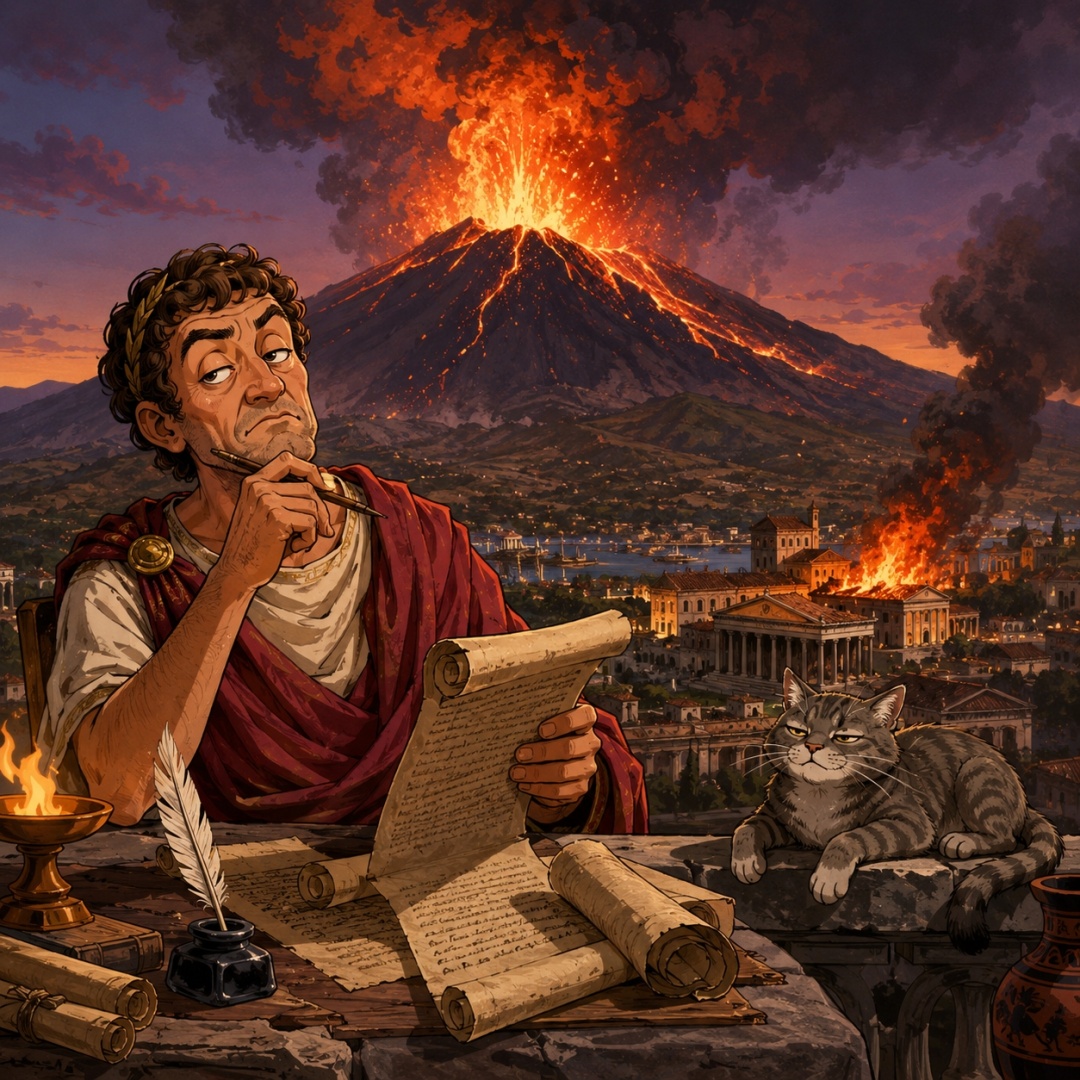
Picture this: Ancient Greece, 387 BC. Philosophers are pondering the meaning of existence, playwrights are crafting tragedies, and Mount Etna is having a bit of a tantrum. We're talking a volcanic eruption, folks, a fiery display that would make even the most seasoned pyrotechnician blush. It wasn't quite Valentine's Day, but Etna was certainly feeling the love… the molten, lava-spewing kind of love.
Historical Whispers: Diodorus and Thucydides Spill the Tea
Now, you might be thinking, "How do we even know about this ancient eruption?" Well, we have some historical heavy hitters to thank. Diodorus Siculus and Thucydides, two esteemed historians of antiquity, graced us with tantalizing tidbits about this volcanic event. They didn't exactly give us a play-by-play, but their accounts confirm that Etna did indeed blow its top. Think of them as the ancient world's TMZ, dishing out the hot gossip on volcanic activity.
Plato's Pyrotechnic River: Fact or Fiction?
The Phaedo Files: Decoding Plato's Fiery Flow
Enter Plato, the philosophical superstar. In his dialogue "Phaedo," he describes a river of fire called the Pyriphlegethon. 1 Some scholars believe this fiery flow could be a metaphorical or even literal reference to a lahar – a volcanic mudflow – associated with an Etna eruption. Talk about a philosophical fire hazard!
Lahar or Not Lahar? That is the Question
Was Plato waxing poetic about a real volcanic event, or was he simply engaging in some creative world-building? The jury's still out. But the possibility that Plato's Pyriphlegethon is the earliest known description of a lahar associated with Etna is tantalizing, to say the least. It's like a volcanic riddle wrapped in a philosophical enigma.
The Case of the Missing Crater: A Volcanic Whodunit
Where Did It All Go? The Mystery of the Vanished Vent
Here's where things get even more mysterious. While we know Etna erupted, pinpointing the exact location of the eruption is a bit of a volcanic whodunit. Which of Etna's numerous craters was the culprit? Unfortunately, the historical records are as silent as a sleeping volcano.
A Volcanic Hide-and-Seek Champion
Etna, it seems, is a master of volcanic hide-and-seek. Over the millennia, new craters have formed, old ones have vanished, and the landscape has been reshaped by countless eruptions. Finding the specific vent from 387 BC is like searching for a needle in a haystack… a haystack made of lava and ash.
Digging Deeper: The Experts Weigh In
From Ancient Historians to Modern Scientists: A Volcanic Brain Trust
To unravel the secrets of this ancient eruption, we need a volcanic brain trust. Historians, philologists, philosophers, geologists, and vulcanologists all contribute their expertise to the investigation. It's like assembling the Avengers of Volcanology.
The Multidisciplinary Method: A Volcanic Jigsaw Puzzle
Each discipline provides a piece of the puzzle. Ancient texts offer historical context, scientific studies analyze the volcanic rocks, and philosophical interpretations explore the cultural impact. By combining these diverse perspectives, we can begin to reconstruct the events of 387 BC.
Etna's Eruptive Encore: What Can We Learn?
A Timeless Tale of Volcanic Fury
Etna's eruption in 387 BC serves as a reminder of the raw power of nature. It's a timeless tale of volcanic fury, a testament to the Earth's dynamic processes. And, it's a reminder that even in the ancient world, volcanoes were a force to be reckoned with.
The Importance of Remembering: Lessons from the Past
Studying ancient eruptions isn't just an exercise in historical curiosity. It can also provide valuable insights into volcanic hazards and help us better prepare for future eruptions. By learning from the past, we can mitigate the risks and protect communities that live in the shadow of these magnificent, yet potentially dangerous, mountains.
Discover all our tour offers in Sicily and on the Etna volcano
Etna Unlimited Tours and Excursions